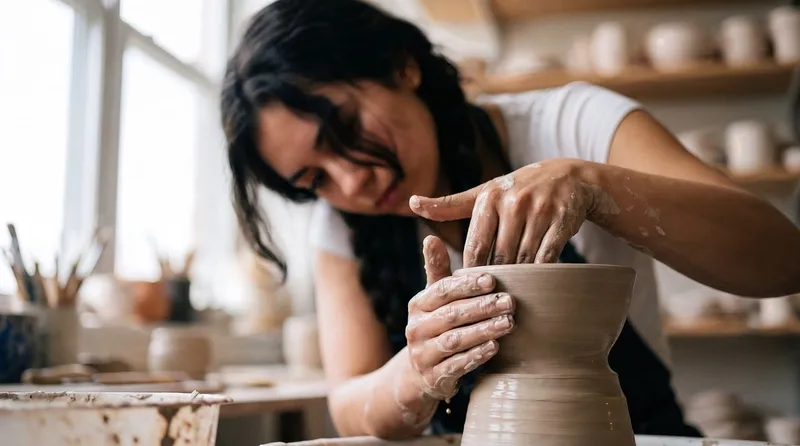
Across North America, artists are using the medium of pottery to explore complex themes of identity, heritage, and belonging. While the technical process of shaping clay remains a universal constant, the motivations behind the craft vary from preserving family roots to challenging cultural perceptions.
Connecting to cultural roots
For many, the art of ceramics serves as a bridge to their ancestry. In Toronto, artist PJ Anderson is currently showcasing her work as part of a special display at the Gardiner Museum that focuses on Caribbean Canadian pottery. Anderson, who was born in northern Manitoba, uses her sculptural pieces to interpret her Afro-Jamaican and Red River Métis heritage.
Her work often incorporates specific symbols that connect her to her family history, such as memories of her father. Anderson’s pieces explore how adornment can function as a form of resistance or self-definition. She has noted that her mixed ethnicity creates a unique experience, stating, "my whole Canadian experience is invalid" due to the way she is perceived by others.
Navigating personal and local history
In Alberta, Kathlene Eben uses her craft to maintain a connection to her family's long history in Slave Lake. Despite living in various cities and even traveling to Australia, Eben has returned to work from a studio on her father's farm. Her practice is influenced by several factors:
- Technical training from Red Deer Polytechnic and Sheridan College.
- The rising costs of housing, which make establishing independent studios difficult.
- A desire to participate in local community events like the Slave Lake Art Walk.
What drives the ceramic craft?
Beyond heritage, the physical act of pottery offers a sense of stability and creative expression. For artists like Benjamin Watkins, who has worked with clay for 25 years, the medium allows for a three-dimensional approach to art that feels similar to painting.
Whether through the creation of large functional platters or intricate sculptural pieces, these artists demonstrate that pottery is a deeply personal dialogue between the maker and the material. As Eben notes, the greatest reward is knowing her creations "still have a place in people's homes."
FAQ
What is the significance of the Toronto museum display?
It highlights Caribbean Canadian ceramics, showing how artists like PJ Anderson use clay to explore the intersection of Canadian and Caribbean identities.
Why are rising costs affecting local potters?
High housing costs can make it difficult for artists to establish and maintain their own dedicated studio spaces outside of family properties.